Single Peptides · Exact presentation
NAD+ · 1000 mg Vial
NAD+ · 1000 mg Vial is an exact single peptide or compound entry. This strength is kept separate because concentration and calculations depend on vial amount.
Educational research information for this exact variation. It is not medical advice, a prescription, or proof of regulatory approval.
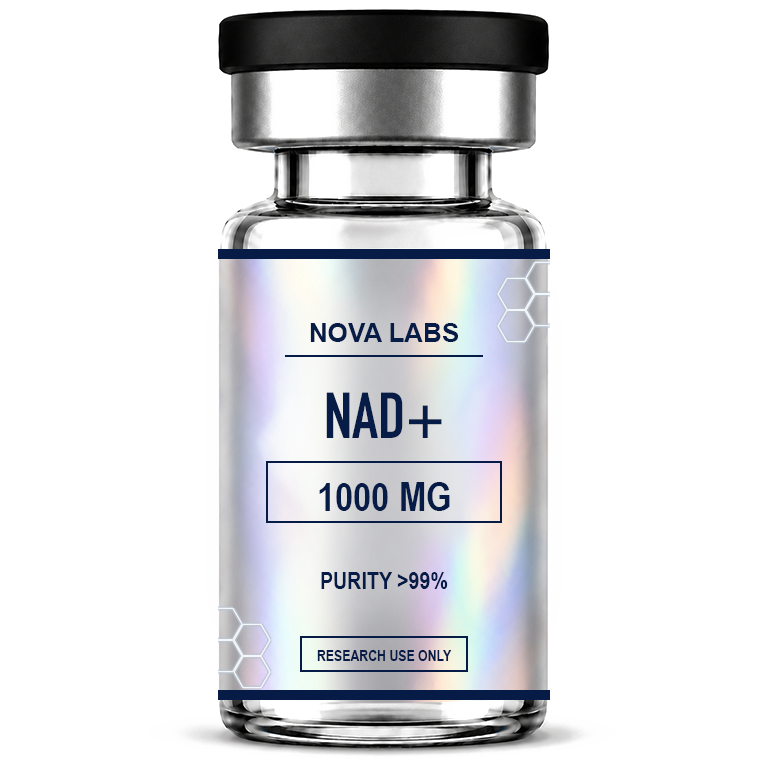
Separate commercial record
Availability in the Dominican Republic
This educational entry is separate from the live catalog. Check the exact commercial record for current availability, price, and lot documentation. View exact commercial record.
Dosing & Reconstitution Guide
For a 1000 mg presentation, the reference concentration of 333.3 mg/mL mathematically corresponds to 3 mL final volume. This is concentration math, not a universal preparation instruction; the lot CoA and documentation control. 333.3 mg/mL. On a U-100 syringe, 1 unit equals 0.01 mL; the amount per unit would be 3.333 mg at this concentration.
Standard / Gradual Titration Approach (3 mL = 333.3 mg/mL)
The source chart summarizes “50 mg–100 mg” at “Daily” frequency as educational information. PeptidosRD does not convert it into a clinical recommendation; any protocol must be checked against primary studies, applicable labeling, and qualified oversight.
Standard / Gradual Titration Approach (3 mL = 333.3 mg/mL)
| Week | Daily Dose (mg) | Units (per injection) (mL) |
|---|---|---|
| Week 1 | 50 mg | 15 units (0.15 mL) |
| Week 2 | 75 mg | 22.5 units (0.225 mL) |
| Weeks 3–8 | 100 mg | 30 units (0.30 mL) |
| Weeks 9–12 | 100 mg | 30 units (0.30 mL) |
| Weeks 13–16 | 100 mg | 30 units (0.30 mL) |
Reconstitution Steps
For a 1000 mg presentation, the reference concentration of 333.3 mg/mL mathematically corresponds to 3 mL final volume. This is concentration math, not a universal preparation instruction; the lot CoA and documentation control. 333.3 mg/mL. On a U-100 syringe, 1 unit equals 0.01 mL; the amount per unit would be 3.333 mg at this concentration.
Storage Instructions
Proper storage preserves peptide quality.
Lyophilized: Store at −20 °C (−4 °F) in dry, dark conditions; stable for 1+ year.[5]
Reconstituted: Refrigerate at 2–8 °C (35.6–46.4 °F); use within 3–4 weeks and avoid freeze–thaw.[6]
Allow vials to reach room temperature before opening to reduce condensation uptake.
How This Works
It is studied in cellular bioenergetics, mitochondrial function, substrate metabolism, or stress signaling. The specific molecular target depends on the compound.
Potential Benefits & Side Effects
A biochemical effect should not be extrapolated to a clinical outcome. Formulation, concentration, and studied population are decisive.
Potential Benefits (Reported in Literature)
Evidence includes preclinical models and, for selected agents, human trials or authorized medicines with narrowly defined indications.
Preparation
For a 1000 mg presentation, the reference concentration of 333.3 mg/mL mathematically corresponds to 3 mL final volume. This is concentration math, not a universal preparation instruction; the lot CoA and documentation control. 333.3 mg/mL. On a U-100 syringe, 1 unit equals 0.01 mL; the amount per unit would be 3.333 mg at this concentration.
Volume Considerations
A biochemical effect should not be extrapolated to a clinical outcome. Formulation, concentration, and studied population are decisive.
Source trail
Scientific references and source discovery
- PeptideDosages — exact NAD+ · 1000 mg Vial entrysecondary-structure
- PubMed — literature search for NAD+primary-discovery
- ClinicalTrials.gov — study search for NAD+trial-registry
- View Sourcesource-reference
- View Sourcesource-reference
- View Sourcesource-reference
- View Sourcesource-reference
- View Sourcesource-reference
- View Sourcesource-reference
- View Sourcesource-reference